The secret of the perfect proportion
What if the solution to solubility, stability, and performance wasn’t adding more ingredients — but finding the right proportion?

Written by
Maria Fernanda Silva, PhD

For many years, the cosmetic industry has faced the same recurring challenges: poor solubility of actives, chemical instability, low bioavailability and dermal penetration.
These challenges have become even more visible as industries move toward cleaner labels, simpler formulations, and higher expectations around safety and sustainability.
The problem is that many conventional solutions rely on increasingly complex formulations (multiple co-solvents, stabilizers, chelators, encapsulation systems, or auxiliary delivery aids) just to make ingredients work.
In nature, living systems rely on structured liquid environments that stabilize, protect, and transport biomolecules, even under extreme conditions like dehydration or temperature stress.
It is in these systems that we inspire to develop our technology.
So… what is a NADES?
A Natural Deep Eutectic Solvent (NADES) is formed when two or more solid compounds are mixed at a very specific ratio. At that proportion, the solids become a stable liquid, because the molecules attract and organize themselves through multiple intermolecular interactions.
But that's not the most important part.
The key is that, once combined, the molecules start interacting with each other creating a highly organized liquid system with properties that none of the components have on their own.
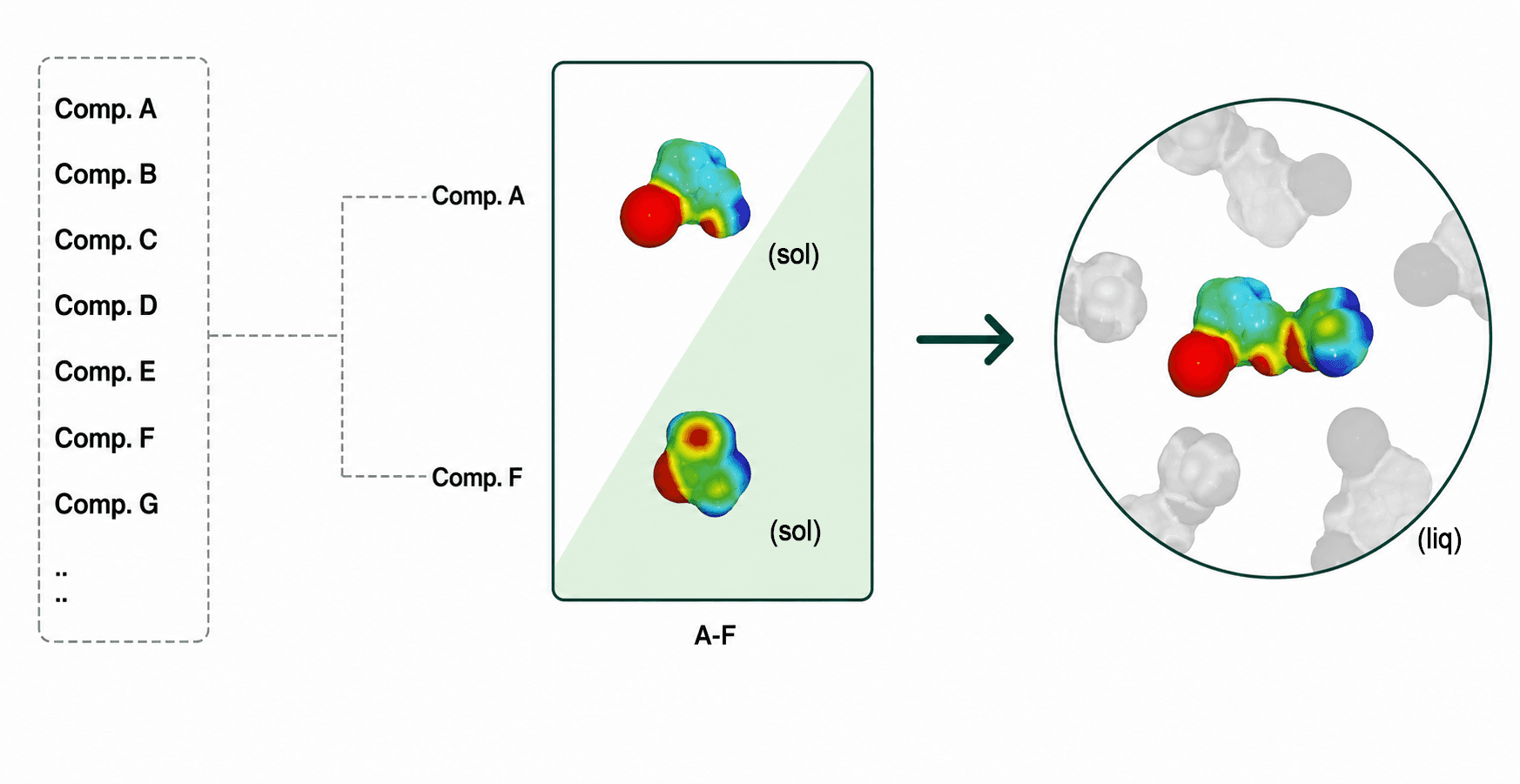
Fig. 1. Conceptual representation of supramolecular hydrogen-bond network formation in a eutectic liquid system.
This image shows that instead of behaving as isolated molecules, the components in a eutectic system form a cooperative network. That network defines how the liquid behaves: its polarity, viscosity, stability, and ability to interact with other molecules.
This is why proportions matter so much. Change the ratio, and the system changes entirely.
Why this matters for real formulations
Traditional solvents dissolve things, but they don’t offer much control beyond that. On the other hand, NADES create a specific microenvironment around the molecules they carry.
That environment can:
Improve solubility of difficult ingredients
Increase stability by reducing water activity
Enhance functional availability without aggressive penetration enhancers
All of this happens without sacrificing performance, and often while simplifying the formulation.
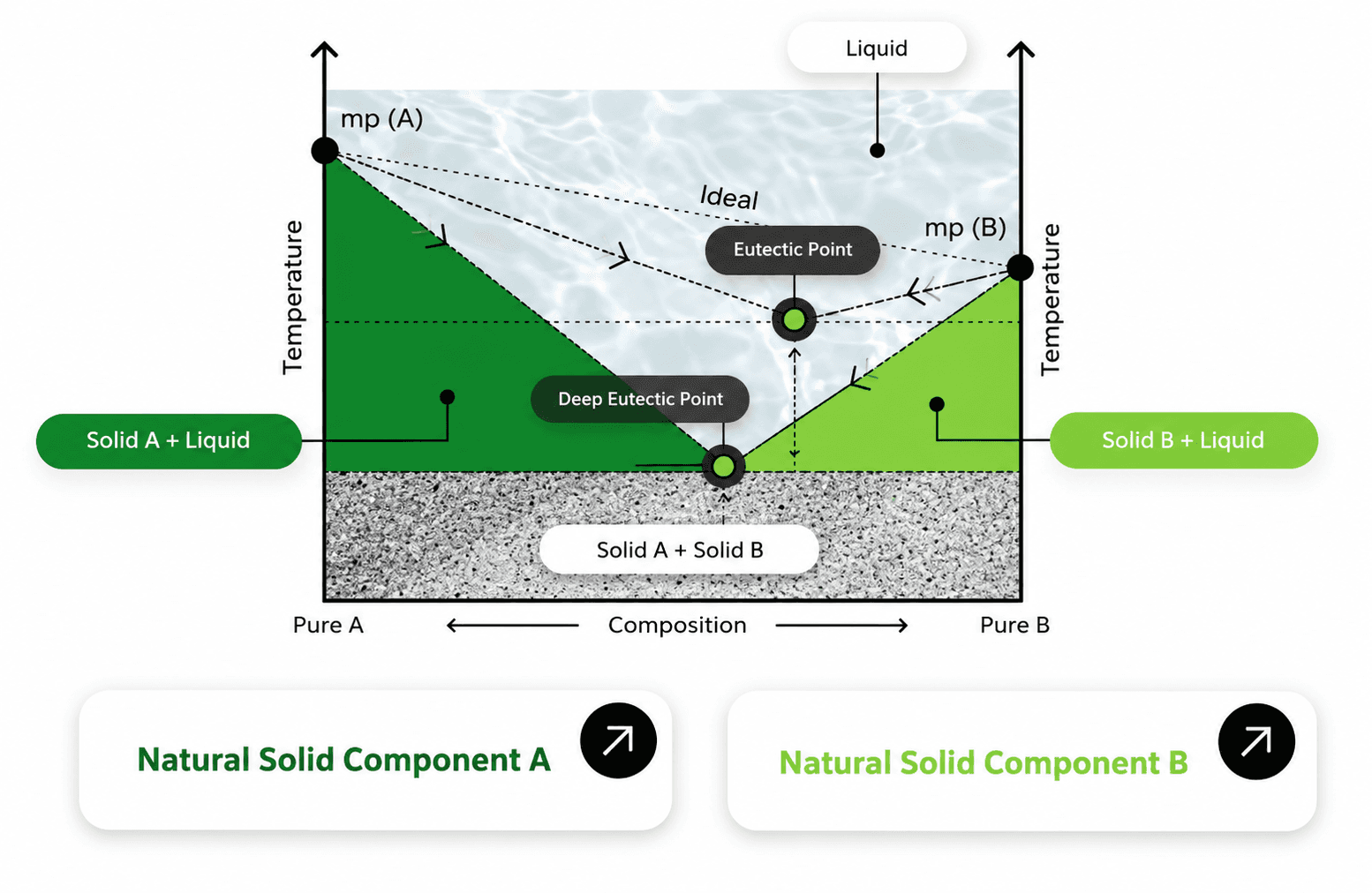
Fig. 2. Phase behavior of natural solid components leading to deep eutectic liquid formation.
This second image helps visualize that if we combine solids at the eutectic point, the melting temperature drops dramatically, and a stable liquid phase appears.
That’s the foundation that allows us to design systems that are easy to handle, scalable, and compatible with industrial processes.
Did you enjoy this article?
If you’re curious to see how this approach translates into validated, real-world ingredients, you can reach us directly through our website.